Are Trump’s Tariffs Now at Their Maximum Impact?
06.12.2025
Companies Push Back on Trump-Era Tariffs
A growing number of U.S. businesses are asking the Trump administration for exemptions from its steep tariffs on imported goods, arguing that the duties are squeezing profits and driving up consumer prices without meaningfully boosting domestic manufacturing.
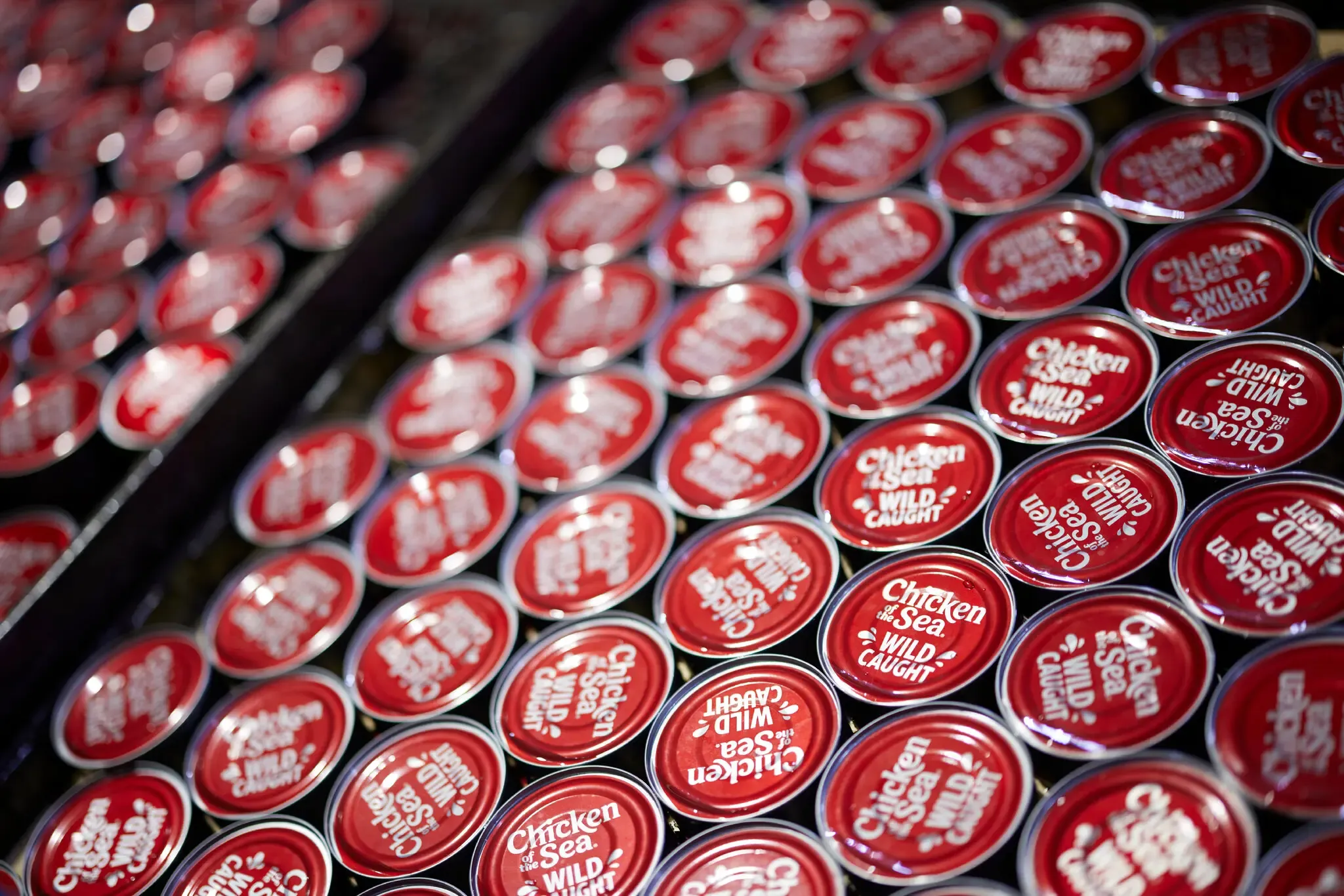
Before the latest tariffs kicked in this year, the Chicken of the Sea plant in Lyons, Ga., ramped up production to build four to six months of canned tuna inventory, using imported fish. That stockpile helped shield the company for a while — but only briefly.
Once the administration expanded tariffs worldwide, the costs of key inputs — tuna, olive oil and steel cans — all climbed. The factory has since cut back to four operating days a week instead of five and has sold off all of the pre-tariff inventory. Company leaders say their remaining options are to raise prices or win an exemption.
“It is squeezing us, and it forces us to really make some tough decisions,” said Andy Mecs, president of Chicken of the Sea International. “Inevitably, I think you will see some inflation coming if we don’t see some relief pretty soon.”
Exemptions Offer a Glimmer of Hope
The administration’s decision last month to exempt some products that are not produced in the United States — like coffee and bananas — has encouraged importers hoping for similar relief.
Chicken of the Sea and Georgia lawmakers have pressed White House officials to carve out tariffs on goods that have no American alternative, such as the frozen tuna the company buys from Thailand, Vietnam, Ecuador and Indonesia. The species used for canning is caught in warm equatorial waters.
“It’s not like there’s just tuna swimming along in Ohio,” Mr. Mecs said. On the tariffs more broadly, he added, “I would hope that we have hit the high-water mark, and we’re on the way down.”
Since those initial exemptions, businesses that depend on foreign inputs — from factories bringing in specialized machinery to retailers selling artificial Christmas trees — have flooded Washington with requests. They say the tariffs are largely functioning as a consumer tax and undermining confidence in the economy rather than restoring American production.
What Comes Next for Trade Policy?
The surge in petitions has raised questions about how the president’s trade approach will evolve. Over the past year, Mr. Trump has imposed, paused, and reinstated more tariffs than the United States had seen in decades.
The Supreme Court is expected to rule soon on whether many of the tariffs were legally imposed. Some legal experts believe the justices may strike down duties enacted under an economic emergency statute. While the president still has other legal tools to reintroduce tariffs, some executives hope a court loss would push the administration to focus duties more narrowly on strategic imports rather than on a broad swath of goods.
Everett Eissenstat, now a partner at the law and lobbying firm Squire Patton Boggs and a former economic adviser to Mr. Trump, said the administration appears open to discussing more exemptions, particularly for raw materials and machinery that U.S. factories rely on.
“I think it’s a natural occurrence, now that they’ve got a lot of these tariffs in place, that you’re going to start having more dialogue about how they’re being implemented,” he said.
Tariffs and Rising Prices
Initially, the impact of tariffs on consumer prices was somewhat muted. Over time, though, the effect has become clearer. While Trump officials publicly maintain that tariffs are not driving inflation, economists have drawn different conclusions.
In October, researchers at the Federal Reserve Bank of St. Louis reported that prices of durable goods affected by tariffs had “increased notably” and concluded that tariff measures were already putting “measurable upward pressure on consumer prices.” Rising costs have weighed on the president’s approval ratings and appeared to benefit Democrats in recent elections.
Officials have framed the new exemptions as evidence of successful deal-making. Kush Desai, a White House spokesman, said the exempted products “largely cannot be physically grown or extracted in the United States.” Weather patterns, he argued, prevent the cultivation of certain crops like cinnamon and saffron, even if other comparative disadvantages could be addressed by investment.
Still, the relief is modest. The Peterson Institute for International Economics estimates that November’s exemptions on items like coffee, bananas, cocoa beans and tomatoes would save the average U.S. household about $35 a year — a small amount compared with an estimated $1,700 in additional annual costs tied to the tariffs overall.
Ed Gresser, a former U.S. trade official now at the Progressive Policy Institute, called the exemptions “a cosmetic gesture.”
Mr. Trump has branded himself the “affordability president” and has often claimed credit for lower prices. Yet in a cabinet meeting on Tuesday, he dismissed concerns over living costs, calling affordability a “fake narrative” pushed by Democrats. He has repeatedly defended tariffs as a tool of strength, writing on Nov. 29 that “Tariffs have made our Country Rich, Strong, Powerful, and Safe.”
Expanding Tariffs, Not Retreating
While the administration has laid the groundwork for additional carve-outs to the “reciprocal” tariffs it placed on certain countries, it continues to broaden other duties. Levies on steel and aluminum now apply to a wide array of consumer and industrial goods, from gymnastics balance beams to cans of condensed milk.
The White House is also considering new tariffs on semiconductors, electronics, critical minerals, medical devices and other strategic products.
Kelly Ann Shaw, a partner at Akin Gump and a former Trump White House official, said that “some degree of tariff recalibration was always part of the plan.” But she cautioned that these tweaks should not be interpreted as a major change in direction.
Given strong stock market performance, solid growth statistics and promises of large foreign investments, Ms. Shaw said the administration believes its economic strategy is working. “From their perspective, they’ve bucked all orthodoxy and landed the plane,” she said.

The Debate Over Comparative Advantage
When the administration first rolled out broad global tariffs this year, officials emphasized there would be no exemptions and no exclusions, partly to avoid being overwhelmed by lobbying and special requests.
In the first Trump term, companies filed hundreds of thousands of exemption applications, often with the help of expensive Washington law firms. The process was criticized as opaque and uneven, though many firms viewed the waivers they received as crucial lifelines.
In the second term, some powerful industries have again won generous exemptions. Most importers, however, are still paying the tariffs, regardless of whether their products can be made in the United States.
Economists and executives have been especially critical of tariffs on goods that Americans do not produce and are unlikely to produce. They argue this approach ignores the principle of comparative advantage — the idea that countries benefit by specializing in what they are relatively good at and trading for other goods.
A Holiday Business Feels the Pinch
Mac Harman, founder of Balsam Brands, which sells holiday decorations, supports efforts to ramp up U.S. production of strategically important items like minerals or medical supplies. But he questions tariffs on pre-lit artificial Christmas trees, which he says have never been manufactured domestically.
Since pre-strung trees were first developed, he said, they have always been produced overseas, initially in Thailand and later in China. In his view, U.S. workers are not interested in that kind of assembly work. “The U.S. is really developed, so we should be doing advanced manufacturing,” he said.
Like many companies facing double-digit tariffs, Balsam Brands has made painful adjustments. It raised prices by more than 10 percent on average, laid off 10 percent of its staff, canceled expansion plans and suspended office perks like free lunches. The company stopped importing certain high-tariff items, such as snow globes and ornate lights.
Balsam Brands, like Chicken of the Sea, stockpiled inventory ahead of the new levies — a strategy that companies likely won’t be able to repeat in the same way. The firm is still feeling the consequences: higher prices and fewer offerings have left U.S. sales up only about 8 percent this year, compared with double-digit growth in markets like France, Germany, Australia, Canada and Britain, Mr. Harman said.
He noted that officials in Washington have expressed concern about consumer sentiment and whether holiday affordability could become a political liability. He hopes a Supreme Court ruling against the president’s tariffs could create an opening to replace broad-based duties with more targeted ones.
“I think there’s really good reasons to do it,” he said of using tariffs as a policy tool. “I just don’t think it should be on nonstrategic goods that have never been made in the U.S., like Christmas trees.”