Your Go-To Restaurant Won’t Last Forever. Here’s How to Handle It
20.01.2026
When Favorite Restaurants Disappear, Something Personal Goes With Them
Not long after Birdie G’s in Santa Monica announced it would eventually shut its doors, something strange started happening: the restaurant’s plates began to vanish. The bistro dishes — trimmed in green and marked with a tiny hummingbird — were quietly walking out with guests.
Owner Jeremy Fox gently pleaded on Instagram for people to stop taking them. The restaurant was still open, with events and dinners yet to come. They still needed the plates.
Stealing isn’t defensible — but the impulse behind it is familiar. When a beloved restaurant closes, the loss feels oddly intimate. It’s not just about food; it’s about memory, identity and time. And unlike other losses, there’s no clear ritual for grieving it.
Restaurants as Time Machines
When Birdie G’s opened in 2019, one dessert there — a rose-petal pie layered with strawberry, hibiscus jelly and raspberry mousse — etched itself into memory. Remembering that dish also meant remembering a moment: sitting at the bar with my then-boyfriend, before we were married, sharing pickles and cocktails, imagining the garden we’d someday plant together.
Restaurants don’t just feed us. They preserve versions of who we were — at 19, at 27, at 35. They anchor memories to specific streets, neighborhoods and cities. Lose the place, and the memory suddenly feels unmoored.
The Shock of Sudden Closures
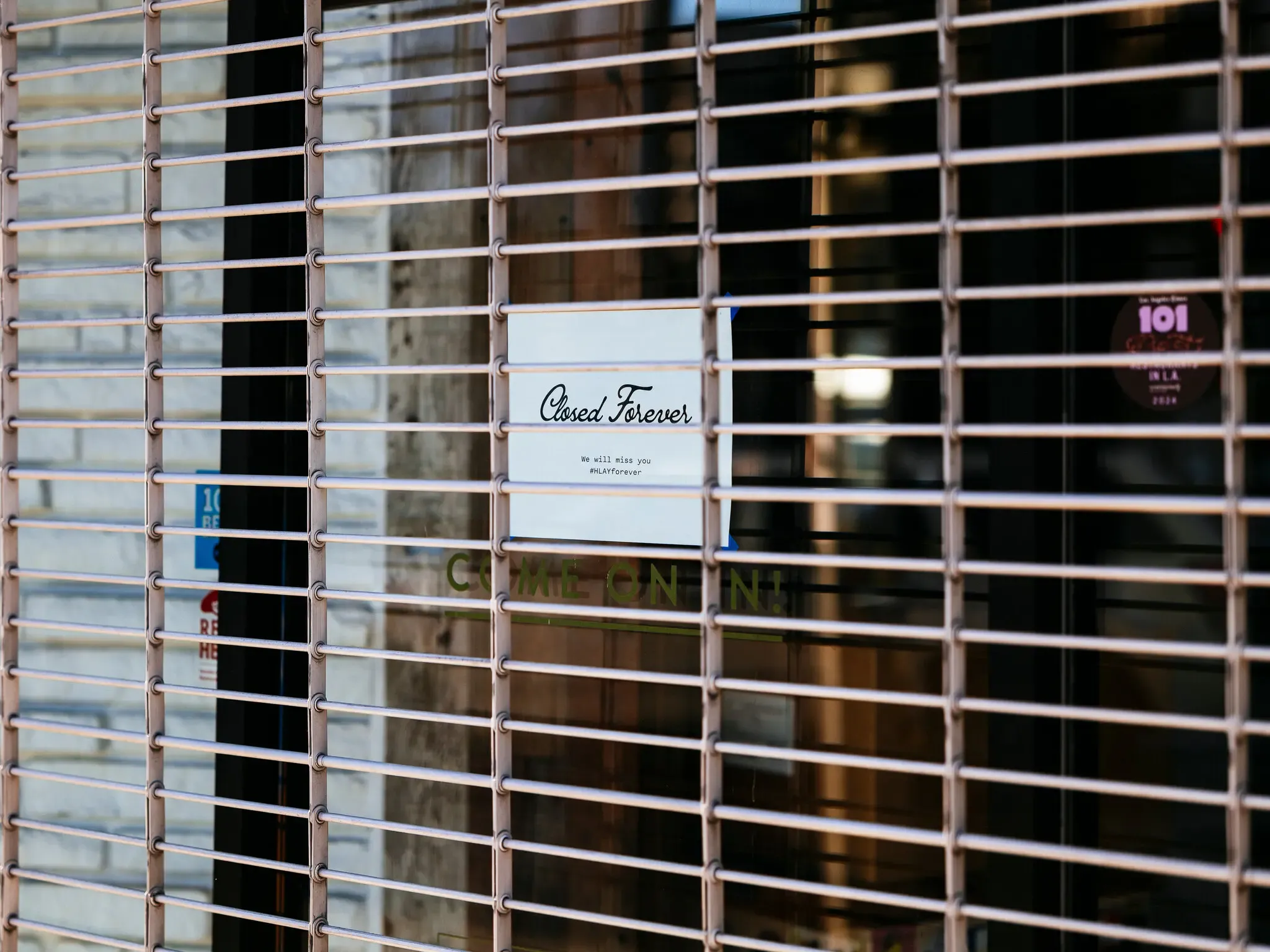
Sometimes a restaurant gives notice. There’s time for one last meal, one last look around, a chance to say goodbye even while resenting the ending. Other times, it vanishes overnight. You walk past and see papered windows and a handwritten sign that feels impossible — wasn’t it packed just days ago?
The regret usually hits fast: not going often enough, not paying closer attention. Would taking a plate make the loss easier? Of course not. But it raises the question — how do you mourn a restaurant?
Why Restaurant Loss Feels Different
Writer Mona Holmes, who covers Los Angeles food culture, once compared restaurant closures to the loss of artists or musicians. When musicians die, people share playlists and performances. Their work lives on. Restaurants don’t work that way.
You can replay a song endlessly. You can’t recreate a meal, a room, a moment at a specific table with specific people. When the place is gone, the experience is gone with it.
In Los Angeles especially, closures have accelerated — fueled by wildfires, immigration raids, rising rents and razor-thin profit margins. Even busy dining rooms haven’t been safe. Across the country, rising food and labor costs have pushed menu prices higher, making eating out harder to justify for many diners navigating economic uncertainty.
Often, the full story behind a closure never fully comes out.
Choosing Presence Over Hype
Confronted with that reality, I’ve started doing the only thing that feels within my control: going back. Regularly. Intentionally.
Last year, I began monthly visits to older restaurants and bars — places like Cole’s downtown or the Prince in Koreatown — not for novelty, not for hype, but for continuity. These outings became a way to stay grounded, to step outside food’s constant churn of trends and algorithms.
I still try new places. But revisiting old ones has become its own kind of practice — a reminder that showing up matters.
What Keeps a Restaurant Alive
For years, a small, naive part of me believed that the places I loved would always be there. But restaurants, like people, aren’t built to last forever.
What gives them meaning isn’t stars, lists or viral reels. It’s return. It’s repetition. It’s choosing to sit down again and again while you still can.
If there’s an answer to the quiet grief of restaurant closures, it might be this: go now. Go often. And don’t assume you’ll always have another chance.