Police to Charge Surviving Gunman in Bondi Hanukkah Attack
Australian authorities say they expect to file criminal charges against the surviving gunman involved in a deadly shooting at a Hanukkah celebration on Sydney’s Bondi Beach, an attack officials have formally labeled an act of terrorism.
Police say a father and son opened fire on a large Jewish holiday gathering on Sunday evening, killing at least 15 people and wounding dozens more. At least 38 victims remained hospitalized on Monday.
Prime Minister Anthony Albanese told the Australian Broadcasting Corporation that the pair appeared to have acted alone and that there was no evidence they belonged to a broader terror cell. Officials have so far declined to specify a clear motive or ideological affiliation.
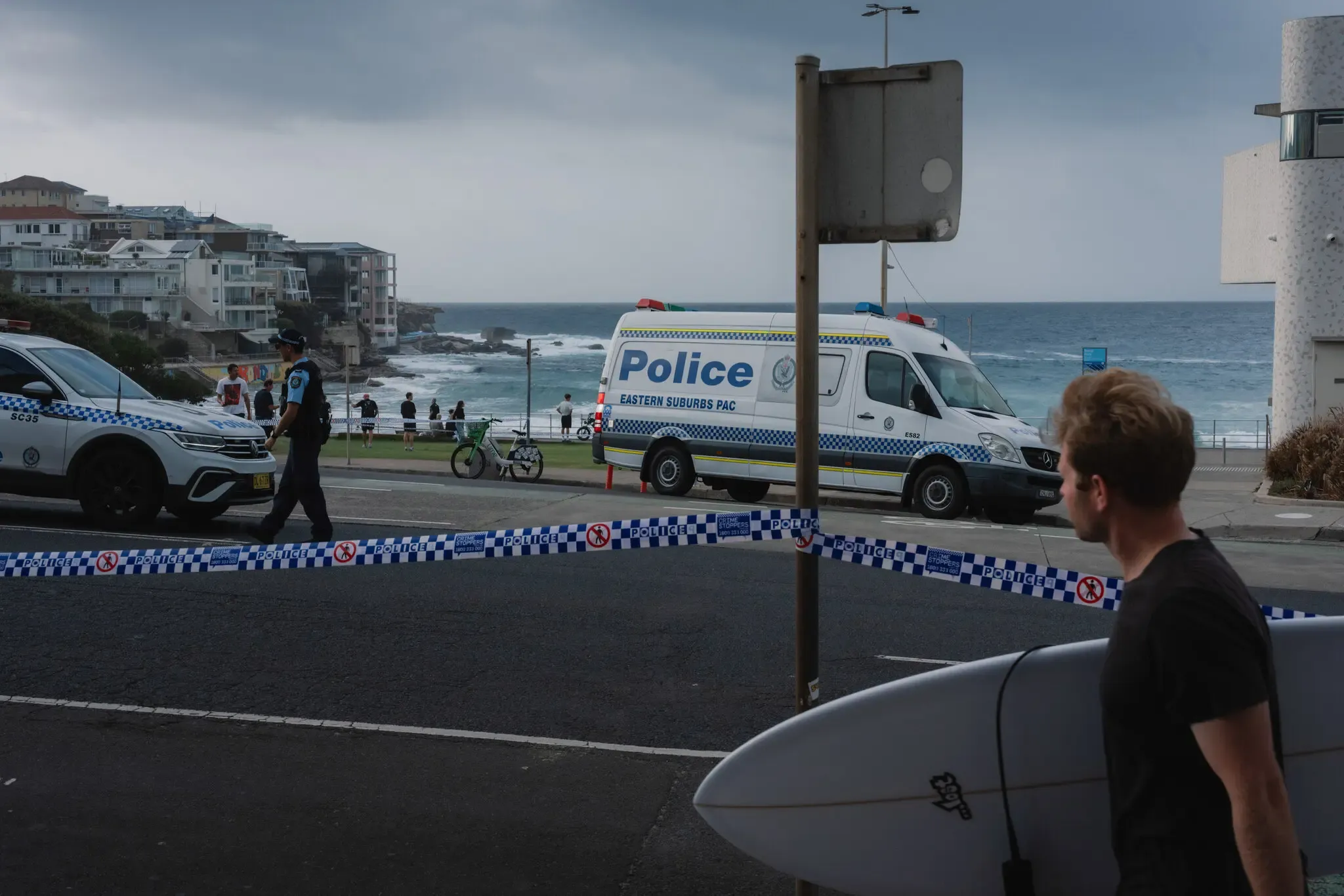
The Attack on Bondi Beach
Hundreds had gathered on Bondi Beach, a famous crescent of sand and a focal point for Sydney’s Jewish community, for an outdoor Hanukkah event featuring music, food and children’s activities.
Around 6:30 p.m. on Sunday, a silver hatchback pulled up near a pedestrian bridge. Two men emerged and began shooting into the crowd, sending people running for cover as gunfire ripped through the celebration.
Photographer Danny Ridley, who was documenting the gathering, said one of the attackers fired at him as he hid behind a parking meter, leaving him with a minor wound. “It was just carnage,” he said.
Police described the suspects as a 50-year-old man and his 24-year-old son. The older man was shot and killed by officers at the scene. The younger man suffered critical injuries and remains in a coma. Two improvised explosive devices were also found nearby and later rendered safe by authorities.
Officials said the older suspect arrived in Australia on a student visa in 1998 and had stayed legally on various visas. His country of origin has not been publicly disclosed. His son is an Australian-born citizen.
Albanese said the younger man first came to the attention of authorities in 2019 because of links to two other individuals. Police interviewed both him and his father at the time, but Australia’s intelligence service later concluded there was no evidence they had been radicalized. Police say neither man had a known criminal record.
The 50-year-old suspect held a recreational hunting license as a member of a gun club that permitted him to possess a long gun, according to New South Wales police. Authorities say they are not searching for any additional attackers.
A Bystander’s Heroic Intervention
In the chaos, a bystander who tackled and disarmed one of the gunmen has emerged as a symbol of courage. Officials identified him as Ahmed el Ahmed, an Australian citizen who immigrated from Syria in 2006 and owns a fruit shop.
Video verified by The New York Times shows el Ahmed approaching a gunman who was firing from behind a palm tree. Crouching behind a car, he then rushed the attacker from behind, wrestled away the weapon and briefly pointed it back at the assailant.
El Ahmed was seriously injured and is recovering in a hospital. New South Wales Premier Chris Minns called him “a genuine hero” and said he had “no doubt” that many lives were saved because of his actions. Prime Minister Albanese said el Ahmed acted “at great risk to himself” and is undergoing operations.
Outside St. George Hospital, where he is being treated, local residents came to leave gifts and letters. One 10-year-old girl, Georgie, said she wanted to thank him “for saving all those people you didn’t even know.”
Police also identified an injured officer as Constable Scott Dyson, who is in serious but stable condition. A second unnamed officer is in similar condition.
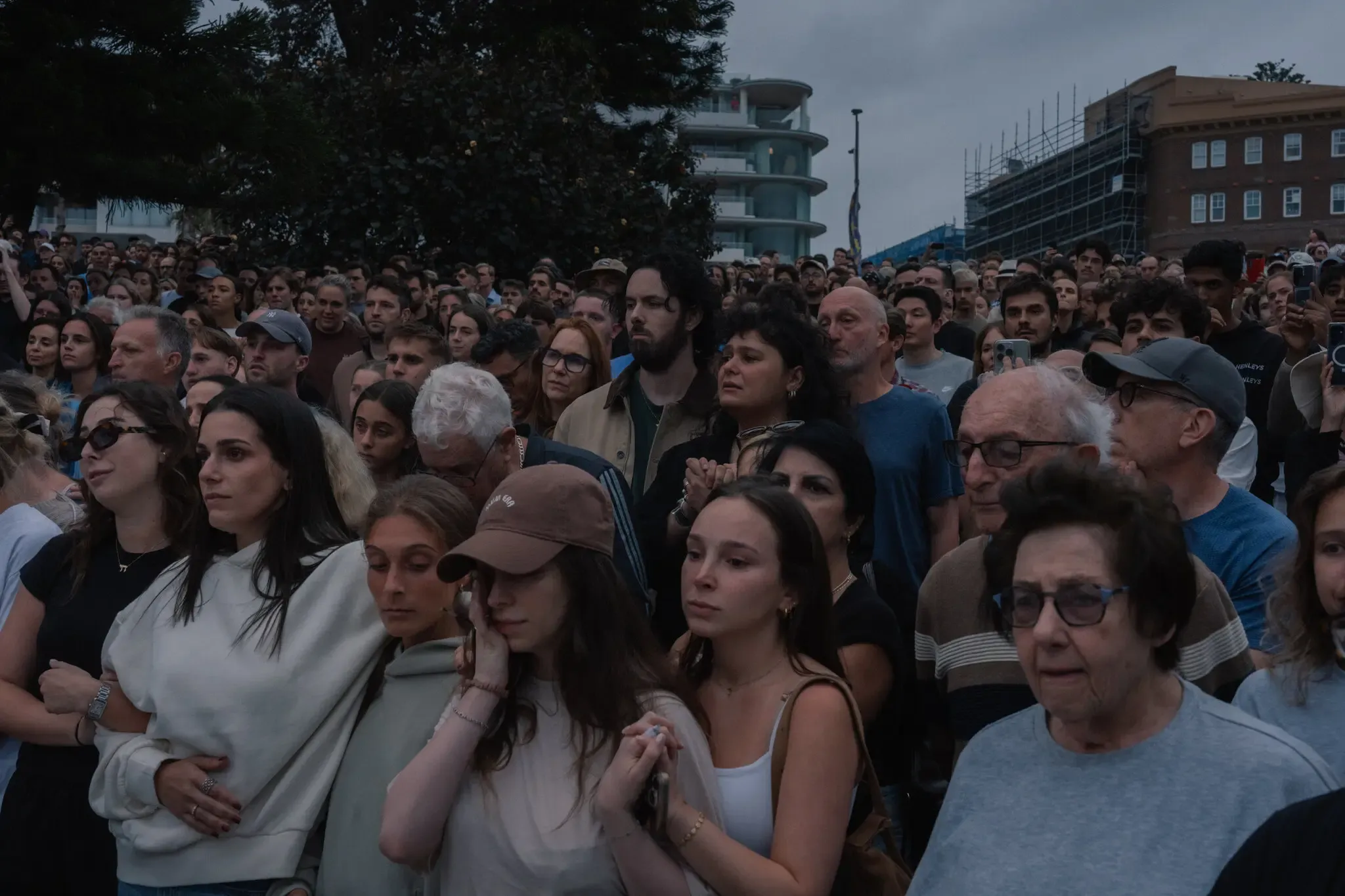
A Community in Shock — and Angry
The attack has deepened fears among Australian Jews, many of whom say they have been warning for months about rising antisemitism.
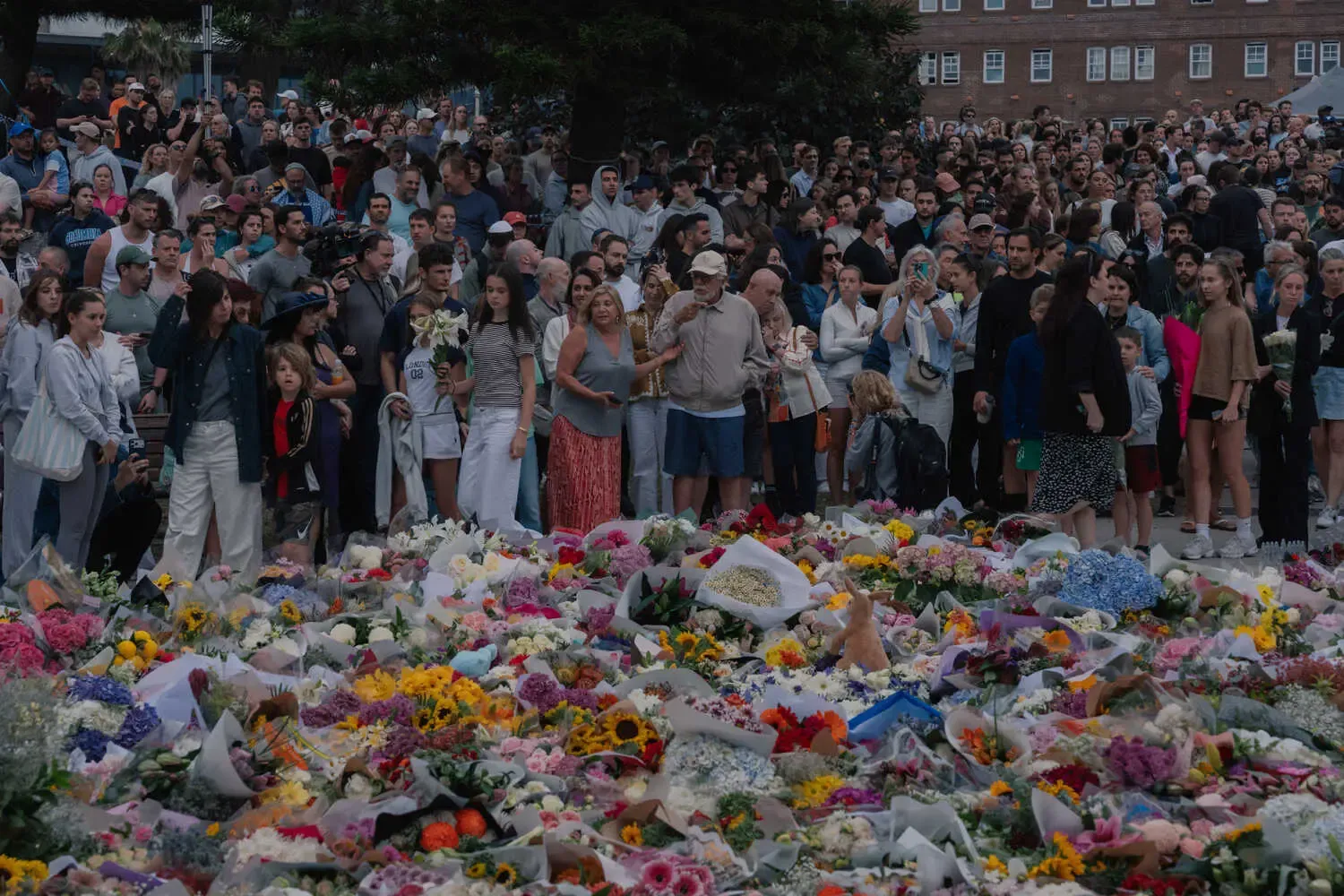
Near the site of the shooting on Monday, members of the Jewish community gathered at a makeshift memorial. Some expressed frustration with what they see as an insufficient government response to threats and hate incidents.
“We feel very let down by the Australian government,” said Ahron Eisman, 37, who said his next-door neighbor was among the dead. “We’ve been saying it’s only a matter of time.”
His brother, Chaimy, cited previous attacks on Jewish institutions and businesses — including arson and graffiti — and the heated rhetoric at protests over Israel’s war in Gaza after the Oct. 7, 2023, Hamas-led attack. “We don’t feel safe here,” he said.
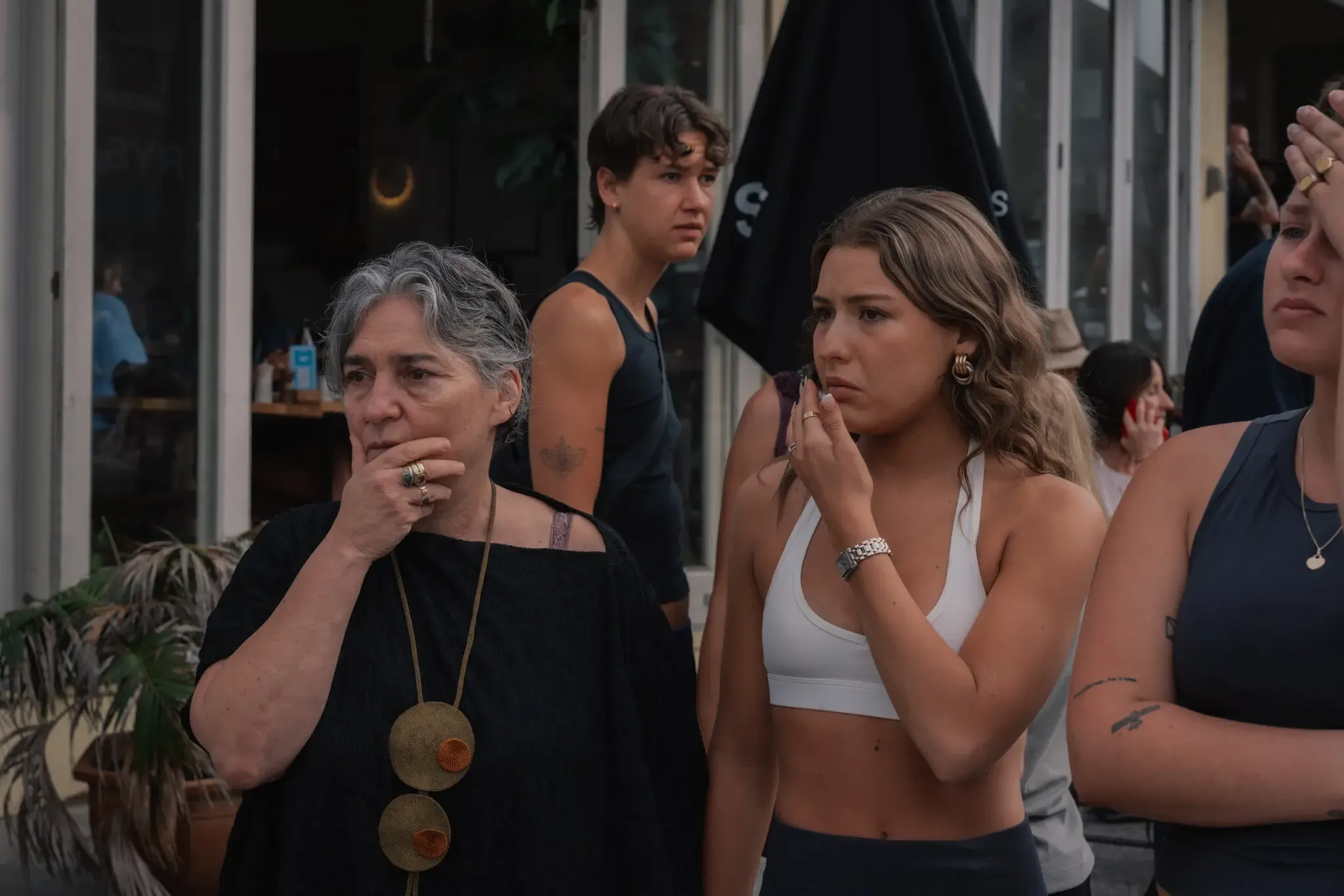
A woman named Pearl, who attended the Hanukkah event, said the crowd felt like “sitting ducks” during the attack and was shaken that a long-standing, family-friendly festival had been targeted.
Architect Yvonne Haber, who has lived in Bondi for three decades, said the beach has been central to Sydney’s Jewish community since Holocaust survivors and other refugees settled there after World War II. “We’ve been walking around on tenterhooks, as Jews,” she said. “This is our worst nightmare.”
Jillian Segal, appointed last year as Australia’s special envoy to combat antisemitism, said in a statement that the shooting capped a “clear pattern” of escalating threats. “What once seemed distant or uncomfortable can no longer be ignored,” she wrote.
Albanese rejected criticism from Israeli Prime Minister Benjamin Netanyahu, who claimed Australia’s move to recognize Palestinian statehood had encouraged antisemitism. The Australian leader said his government had provided significant resources to police and intelligence agencies to counter antisemitic threats and noted that most of the world still views a two-state solution as the path forward in the Middle East.
Scenes of Panic — and Rapid Response
Beyond the horror of the attack, residents also witnessed a powerful communal response.
Bondi Beach is home not only to a large Jewish population but also to surf lifesaving clubs staffed by volunteers and professionals trained in first aid and rescue. When gunfire erupted, members of the nearby Bondi Surf Lifesaving Club and other locals rushed toward danger.
Lifesaver Matias Bengolea, 41, said he had just finished patrol when he heard gunshots. Initially, he grabbed a couple of first-aid kits, but quickly realized they needed more. He ran back for oxygen, defibrillators and rescue boards, which were used as makeshift stretchers.
“It was a bit crazy,” he said, describing volunteers in Christmas elf costumes — there for a party — performing CPR on victims.
Photos shared widely on social media showed professional lifeguard Jackson “Jacko” Doolan sprinting barefoot from Tamarama Beach, about a mile away, carrying a heavy medical bag to help the wounded. Another lifeguard, who had previously responded to a stabbing at a nearby shopping mall, recounted using clothing to create tourniquets in an earlier incident.
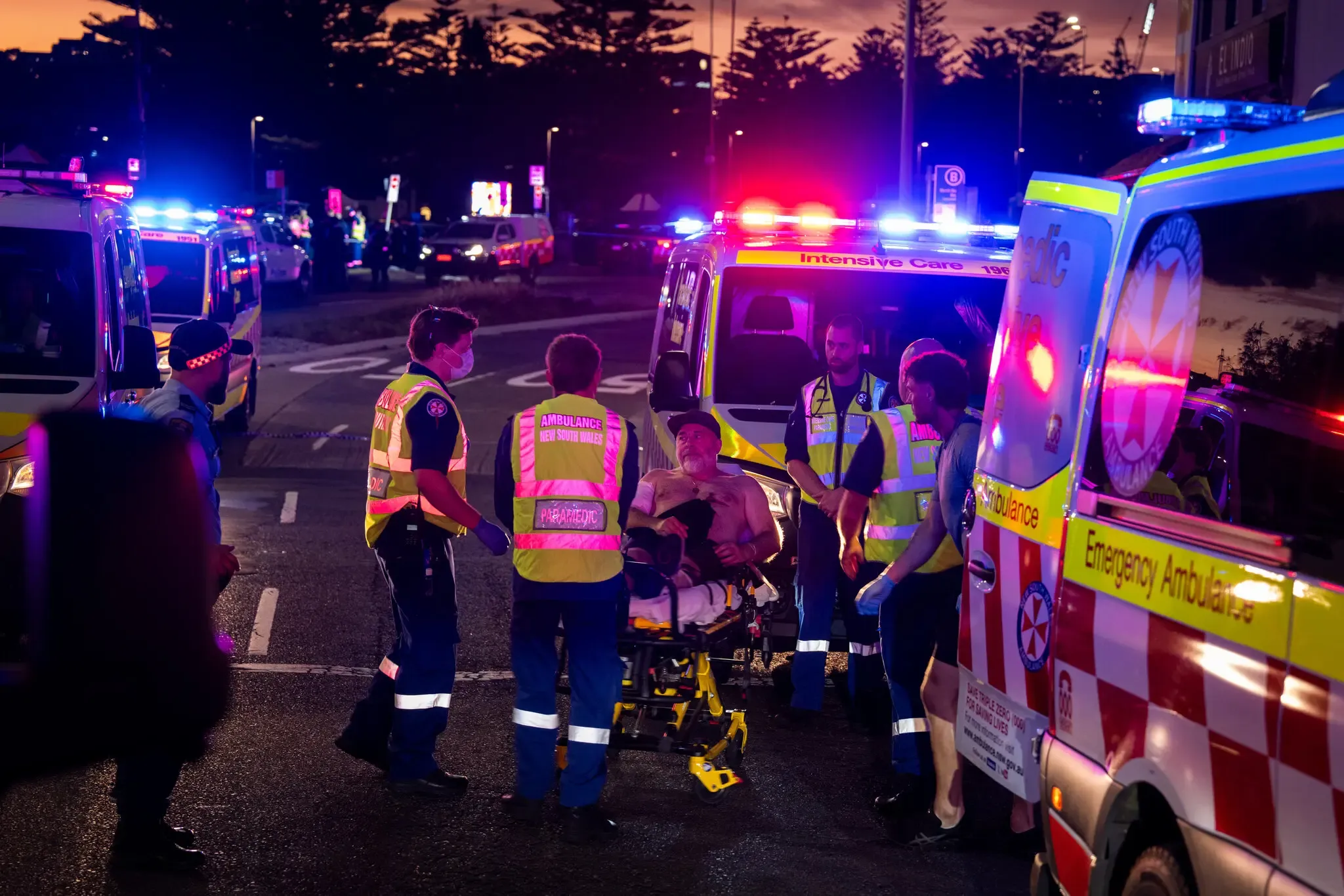
Residents and visitors worked side by side with paramedics, police and private security guards hired for the Hanukkah event. They performed CPR, triaged victims with color-coded tags and carried the injured on surfboards.
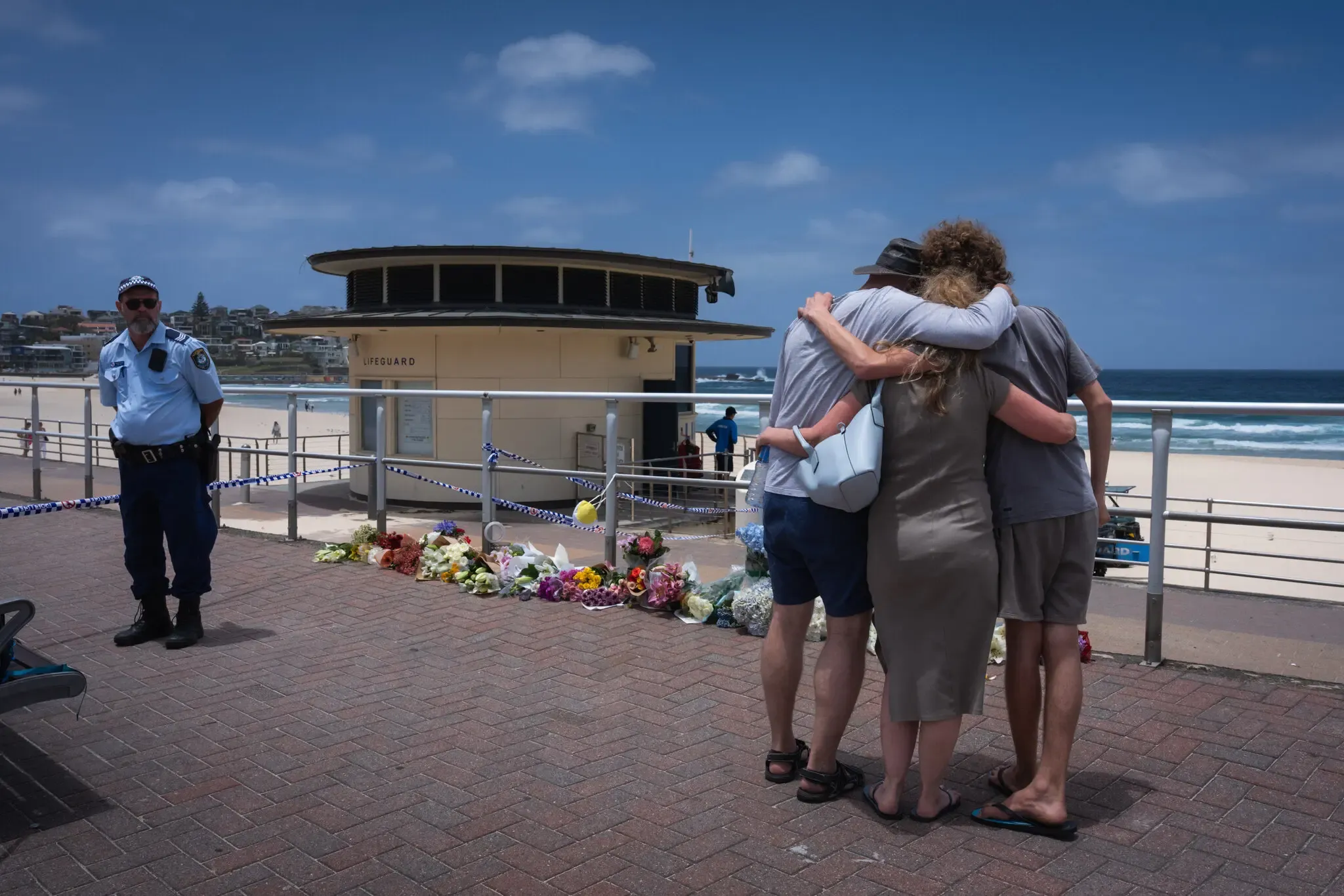
Voices From the Ground
Some of those who rushed in were deeply shaken by what they saw.
Emergency nurse Kaitlin Davidson, 28, watched the attack unfold from her apartment window near the bridge where the shooters took position. She said the gunmen repeatedly reloaded and seemed to have “a ridiculous amount of ammunition and multiple guns.”
Once officers appeared to have neutralized the threat, she ran outside to help. With ambulances delayed by abandoned cars blocking the roads, Davidson treated about six people with gunshot wounds to the legs, shoulders and buttocks. At least one victim appeared to have been shot in the back while fleeing, she said.
David Smith, 25, a volunteer with Community Health Support, a Jewish medical aid group, was dispatched to the scene. A lifelong Bondi resident, he moved from patient to patient, tagging the most critical with red to indicate urgent need.
He said more than 20 victims fell into that category and recalled scenes of people screaming and children searching for parents. Because of Bondi’s tightly knit Jewish community, he knew three of the dead and three of the wounded.
“This is my morning run, this is my afternoon swim,” Smith said, describing how surreal it felt to see his familiar beach turned into a crime scene.
An 18-year-old volunteer lifeguard described watching police open fire on the gunmen, killing one and capturing the other, before he rushed to help a couple who had been among the first shot. Both were dead when he reached them. He then assisted several other victims during the frantic early minutes of the response.
Grief, Fear and a Search for Meaning
The Bondi attack is one of the worst terrorist assaults in modern Australian history and comes at a time of heightened global anxiety over antisemitism and political violence.
For many locals, the tragedy has two parallel narratives: the horror of an antisemitic attack on a community celebration and the hope found in the speed and courage of ordinary people who ran toward danger instead of away from it.
Bengolea, the Argentine-born lifesaver, struggled to put the day into words. He paused, broke down in tears and finally said: “There’s still hope. I think that’s the point. People rushed to help.”