Under Trump, National Security Centers on Money, Not Democratic Ideals
06.12.2025
A Profit-First Vision for U.S. Security
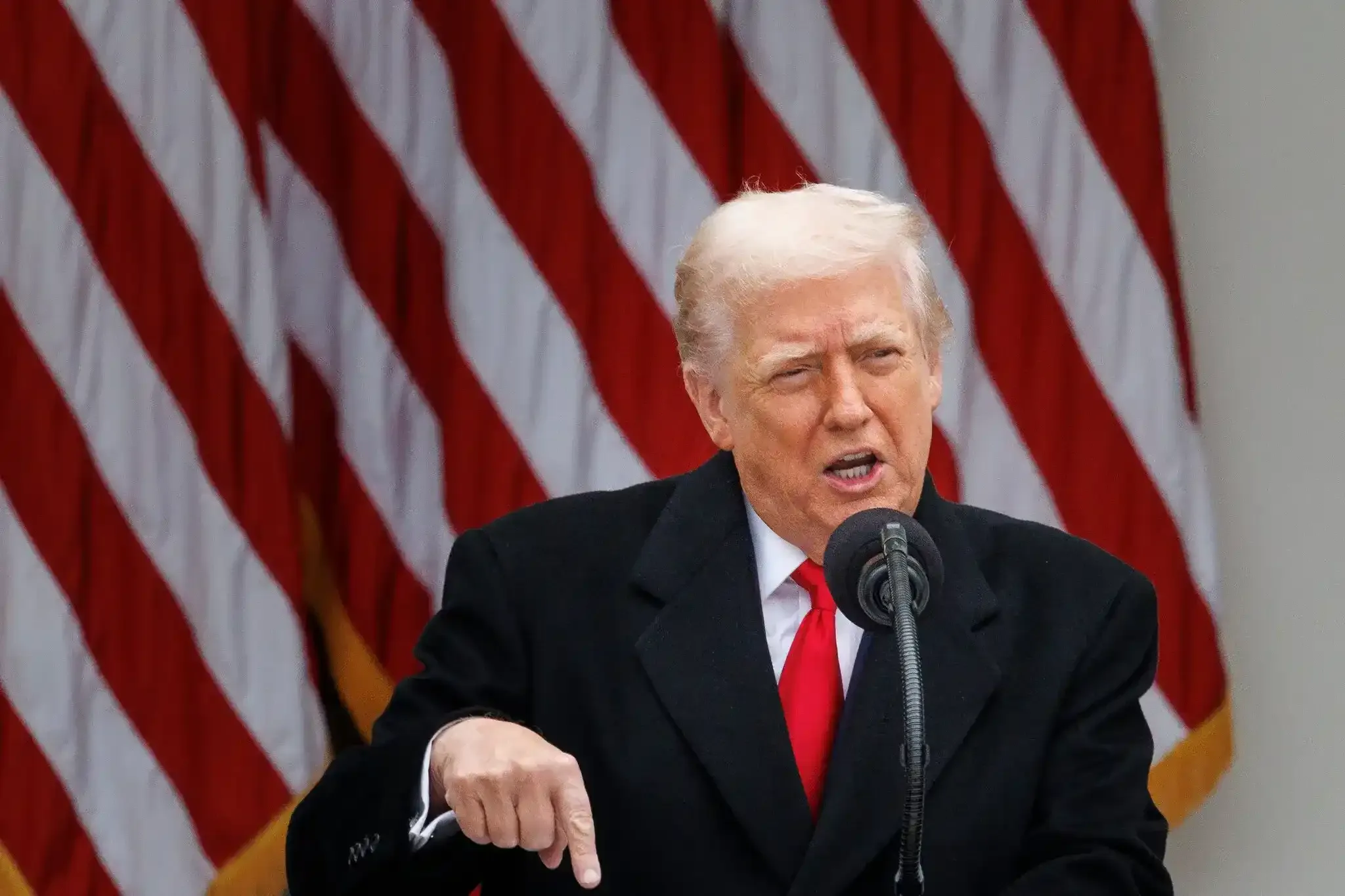
President Trump’s new National Security Strategy (NSS) presents an America that is less interested in spreading democracy and more focused on making deals, curbing migration and avoiding moral judgments about authoritarian governments.
In this worldview, Latin American nations are expected to award major government contracts directly to U.S. firms. Taiwan’s value is framed in terms of its semiconductor industry and shipping routes. And the document urges Washington to stop “lecturing” wealthy Gulf monarchies, viewing them primarily as economic partners.
Overall, the strategy imagines a world in which U.S. power is leveraged mainly to generate profit.
From “Force for Freedom” to Transactional Power
Throughout his second term, Mr. Trump has signaled that his foreign policy priority is to pressure weaker countries in ways that advantage American companies. The new NSS, released Thursday, formally weaves that approach into the official blueprint for U.S. national security.
Compared with previous strategies — including Mr. Trump’s own 2017 version — the new document defines American interests much more narrowly. The older strategy described a contest “between repressive systems and free societies.” The new one replaces that mission with a pledge to seek “peaceful commercial relations” without trying to impose democracy or other social changes on other nations.
The document itself does not have the force of law, and some analysts warn against treating it as a precise roadmap, given the president’s unpredictable style. Still, because administrations typically issue only one NSS per term, the text offers an important snapshot of how Trump-world currently views U.S. power.
Restraint Abroad, Commerce Above All
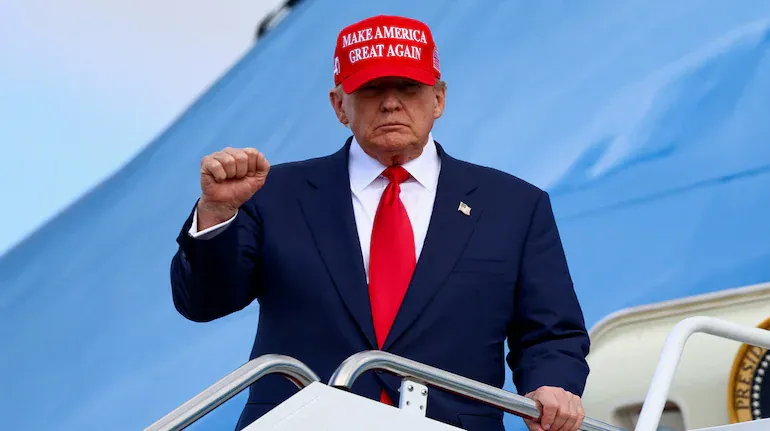
The strategy reflects growing Republican debates over U.S. policy in the Middle East, Russia, China and beyond. It embraces avoiding new wars while energetically promoting business opportunities.
Dan Caldwell, a former senior adviser at the Pentagon who favors military restraint, praised the document as a clean break from the bipartisan, interventionist consensus that dominated U.S. policy after the Cold War. For years, he argued, leaders have overestimated America’s role and what it can achieve with force. In his view, the new NSS is “reality-based” for rejecting those ambitions.
At the same time, the strategy formalizes Mr. Trump’s skepticism toward liberal European governments and his willingness to downplay human rights abuses — as when he dismissed the 2018 murder of a Saudi journalist with the phrase “things happen.”
Representative Gregory W. Meeks, the top Democrat on the House Foreign Affairs Committee, condemned the document as abandoning decades of values-driven U.S. leadership in favor of an “unprincipled” approach.
Europe as a Battleground Over Identity
The strategy paints Europe as threatened by immigration and by its own political elites. It says the United States will cultivate “resistance” to mainstream European leaders, accusing many of them of undermining democratic norms to silence opponents.
The language triggered outrage across the continent, reminiscent of the backlash when Vice President J.D. Vance criticized German officials for trying to limit the rise of far-right parties. Former Swedish prime minister Carl Bildt wrote that the strategy places Washington “to the right of the extreme right in Europe.”
Democracy De-Emphasized Elsewhere
Outside Europe, the 33-page blueprint marks a clear break with longstanding U.S. rhetoric about defending democracy. Israel and Taiwan — long seen as democratic partners in need of American backing — are described mainly in economic and strategic terms, not as ideological allies.
The Middle East is framed as both “a source and destination of international investment.” The strategy urges an end to what it calls America’s misguided attempt to push Gulf monarchies toward different forms of government, advocating instead for acceptance of their traditional systems.
In Latin America, the document declares that Washington will “reassert and enforce the Monroe Doctrine” to restore U.S. dominance in the hemisphere. Diplomats are instructed to seek out big commercial opportunities, especially government contracts.
According to the strategy, deals with countries most dependent on the United States should be structured as sole-source contracts for American companies, maximizing U.S. leverage and profit.
Ambiguity on Venezuela, Focus on the Hemisphere
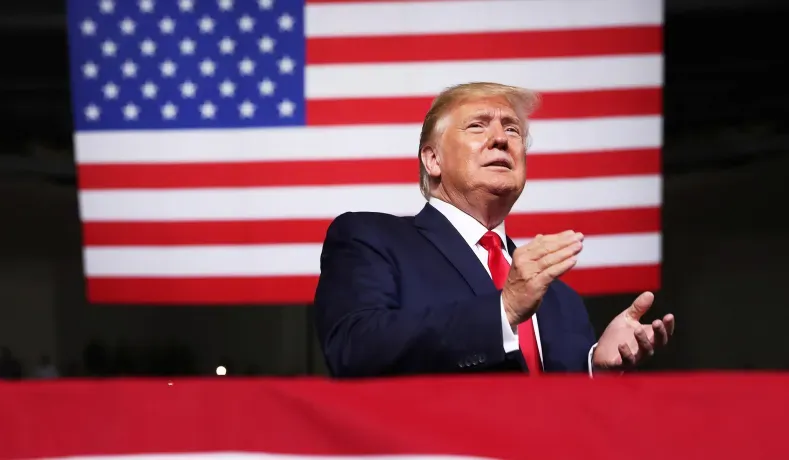
The NSS offers few clues about how the administration is weighing a potential military strike on Venezuela. It expresses a general “predisposition to non-interventionism” but also calls for redeploying U.S. forces to Latin America to confront “urgent threats” in the region.
Caldwell said many in the “America First” camp are wary of a regime-change war in Venezuela but also believe that events in the Western Hemisphere deserve more attention than, for example, control of Ukraine’s Donbas region.
Rethinking Rivals: Russia and China
Compared with prior strategies, the new document tones down confrontational language toward Russia and China.
Gone is the formulation from 2017 that said both nations seek a world fundamentally opposed to U.S. interests and values. Instead, Russia is no longer explicitly labeled an adversary. The strategy says that a swift end to fighting in Ukraine is a “core interest,” with the goal of restoring “strategic stability with Russia” while ensuring that Ukraine survives as a functioning state.
China is described chiefly as a commercial competitor. The risk of war over Taiwan is framed around the potential disruption to the U.S. economy, rather than as an ideological struggle. The document calls for a “mutually advantageous economic relationship” with Beijing, reflecting the more conciliatory tone of the trade truce announced in October by Mr. Trump and China’s leader, Xi Jinping.
Jonathan Czin, who served as director for China on the National Security Council under President Biden, said the new NSS sends a “more cheerful message for Beijing” than either Mr. Biden’s strategy or Trump’s first-term version. He added that China is likely to welcome Washington’s decision to focus more heavily on Latin America, seeing it as a partial easing of pressure in Asia.